Showing posts with label japan anime. Show all posts

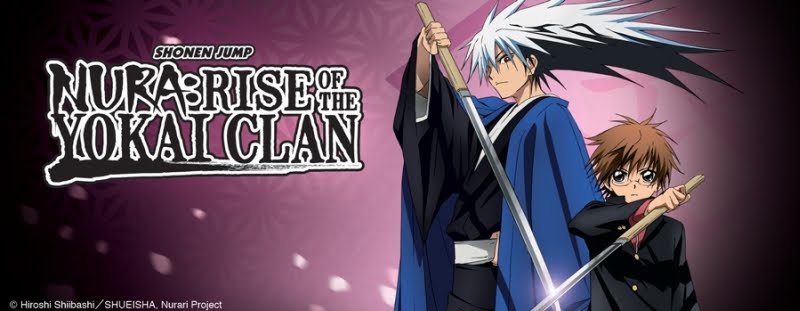
Nura: Rise of the Yokai Clan on VIZAnime.com and Hulu

Nura Rise of the Yokai Clan - anime - HuluVIZ Media, LLC (VIZ Media), is showing Nura: Rise of the Yokai Clan on VIZAnime.com just hours after the episodes are shown in Japan.
This will happen every Monday.

The videos are hosted on Hulu, as you can see on the player at VIZAnime.com.
After getting to the page, I waited...and waited...and got nothing on the player but a black screen.

So I went to Hulu and did a search on Nura: Rise of the Yokai Clan, found the page there and it loaded right up.

Maybe VIZAnime.com was just having a glitch that day.

By the way, it says on the Hulu site...
" Each Monday Hulu will add -- direct from Japan -- subtitled episodes of Nura: Rise of the Yokai Clan, one episode per week immediately following their original Japanese airdates."

So if you go to VIZ and can't see the anime, just go to Hulu.


Nura: Rise of the Yokai Clan on VIZAnime.com and Hulu, posted to http://anime-times.blogspot.com/ on July 7th, 2010

Bleach, Naruto Shippuden and Monster Hunter News

Dragon Ball Z Kai - japanese anime
Dragon Ball Z Kai and Naruto Shippuden
Over at NY Breaking News, Neo discusses Dragon Ball Z Kai airing on CW4kids this fall and the latest Naruto Shippuden English Dub Episodes on iTunes.
You can see Neo's vlog here

Monster Hunter
Okay, Monster Hunter is a game that spawned a manga (Monster Hunter Orage), not the other way around, but since the game is very popular with anime and manga fans, I thought I'd include this.
Capcom has announced that this summer, it will release its new Monster Hunter spinoff game with a Flash-animated tie-in project on Japanese television.
On August 26th, MonHun Nikki Pokapoka Airū-mura will ship for the Sony PSP console in Japan.
Full story here

Fullmetal Alchemist: Brotherhood
Fullmetal Alchemist: Brotherhood, Part 1, comes out on DVD and Blu-ray this week, and you can read a review of it here

Also coming out this week are Bleach, Vol. 28 and Kenichi: Season One.

On a side note, I have seen where you can watch Bleach Episode 272, Ichigo Vs Ulquiorra Conclusion, many places on the web, but so far, I haven’t found a single one that actually works.
If you find one that actually is a link to the episode, you can post it in the comments.
But I'll check the link before I approve it, so no funny business...LOL


Bleach, Naruto Shippuden and Monster Hunter News, posted to http://anime-times.blogspot.com/ on May 25th, 2010.

InuYasha


InuYasha, full title InuYasha, a Feudal Fairy Tale, is a Japanese manga series written and illustrated by Rumiko Takahashi. The story centers on a time-traveling middle school student, a half-demon, a lecherous monk, a fox demon, a demon slayer, and a nekomata during the Sengoku period who seek to find all the fragments of the Jewel of Four Souls (Shikon no Tama) and to keep them out of the hands of evildoers, especially Naraku.

The manga was adapted into a 167 episode anime series produced by Sunrise. Masashi Ikeda directed the first forty-four episodes, while Yasunao Aoki directed the remainder of the series. InuYasha premiered on Yomiuri TV in Japan on 16 October 2000 and ran until 13 September 2004. The television run of the anime ceased without a conclusion to the story. As of April 2008, the manga is still being released in Japan, but has recently begun its final story arc.

In 2002, the manga won the Shogakukan Manga Award for best shōnen title of the year.


technorati tags: anime network,cartoon anime,manga,anime videos,anime movies,japanese anime,anime gallery,anime,anime character,japan anime,anime images,history of anime,all anime,anime pictures

Video Girl Ai

Image Hosted by ImageShack.us
Video Girl Ai is a manga series created by Masakazu Katsura and published by Shueisha's Weekly Shonen Jump. It also has an anime adaptation. The manga is published in English by Viz Communications and in Spanish by Grupo Editorial Vid. It was formerly published in the anthology Animerica Extra by Viz.

It was started in 1990 and continued until 1993, and fifteen manga volumes were produced. The first 13 volumes tell a story about a video girl named Ai Amano. The last two volumes, which came years later, focus on a video girl named Len, hence the new name for these two volumes – Video Girl Len. In fact, a pun is present here which is lost in translation; the two video girls' names, "Ren" and "Ai", combine to form ren'ai – a Japanese word used to describe the type of romantic comedy that Video Girl Ai is. Although they have different protagonists, the "Ai" and "Len" sub-stories are not entirely unrelated; they take place in the same setting, with a similar premise. Two characters from the first 13 volumes also appear in volumes 14 & 15. Volume 15 concludes with a bonus chapter about Video Girl Haruno. Her story is totally separate from the stories of Ai and Len.

A live-action movie of Video Girl Ai was released in 1991.

The Video Girl Ai anime is a six part OVA series which was produced by I.G. Tatsunoko. The series was released in 1992 by Jump Video. It roughly covers most of the material found in volumes 1 and 3 of the manga (and some of Volume 2). The character designs for the anime remained faithful to the manga style.

It is commonly speculated that the author, Masakazu Katsura, used this series as what could be described as a pilot; although he wanted to write a straight romantic comedy, he included sci-fi and action elements, so that the series would guarantee to be a success with both his publishers and (teenage male) audience.

Video Girl Ai was followed in 1993 with another sci-fi/romantic comedy manga DNA² and by the straight romantic comedy I"s in 1997.

Sexy Magical Girl Ai Vol. 1 - Magical Girl Cometh DVD


technorati tags: anime network,cartoon anime,manga,anime videos,anime movies,japanese anime,anime gallery,anime,anime character,japan anime,anime images,history of anime,all anime,anime pictures

Gordian Warrior


Gordian Warrior was a popular anime series aired in 1979 to 1981 in Japan. There were 73 episodes aired at 30 minutes each. It is also referred to as "Champion of Gordian" or "Gardian".

The Earth had become a wasteland of deserts as the survivors work to rebuild communities. Daigo Otaki is a young orphan raised by his uncle. Becoming an adult, Daigo discovers that Victor City was in fact planned by his father who was a genius scientist. Daigo's sister Saori had been managing it. She plead Daigo to take on the inheritance that Daigo's father left him, a super robot system known as Gordian. Daigo would join the Mechacon mechanic combat 18th regiment unit, an organization of law enforcers that defend Victor City against attacks from the Madokuta organization.

The pilot Daigo Otaki controls a small almost human-sized robot container named Protteser. Each time Protteser is in trouble, he jumps into the next biggest robot container named Delinger. Then finally the largest container is Garbin. The alternative names for the robots are Protessa, Deringer, Gadeen.

The original released toy set comes with all 3 robots and the human pilot. The 3 robots ranking from biggest to smallest, Garbin, Delinger, Protteser were respectively released as GB-11, GB-10, GB-09 by Popy pleasure. Their upper sternum is also numbered 3, 2, 1. Though these numbers do not appear in the cartoon at all.

Garbin, largest robot is 15 meters tall weighing 5 tons.
The mechanical leopard Clint is a tribute to Clint Eastwood.
Garvin was reappropriated as Baikanfū in Machine Robo: Revenge of Cronos


technorati tags: anime,anime girl,anime picture,japanese anime

ActiveAnime.com :: RIGHT STUF’S ANIME TODAY FEATURES “10 QUESTIONS” WITH GREG AYRES

ActiveAnime.com :: RIGHT STUF’S ANIME TODAY FEATURES “10 QUESTIONS” WITH GREG AYRES:

"GRIMES, IA, February 16, 2007 – Anime producer and mega-online anime retailer The Right Stuf International closes out Valentine’s week by welcoming Greg Ayres – the voice of “Negi Springfield” in Negima!, “Hideki” in Nerima Daikon Brothers and “Koyuki” in the upcoming release of BECK: Mongolian Chop Squad – to the latest episode of ANIME TODAY.

In this “speed-round” interview, Ayres reveals which roles are closest to him, talks about his favorite anime series (as a voice actor and as a fan) and shares some details about his current and future projects."

History of Anime ,Part 8

Although it is a violation of copyright laws in many countries, some fans watch fansubs, recordings of anime series that have been subtitled by fans. Watching subtitled Japanese versions, though not necessarily downloaded fansubs, is seen by many enthusiasts as the preferred method of watching anime. The ethical implications of producing, distributing, or watching fansubs are topics of much controversy even when fansub groups do not profit from their activities and cease distribution of their work once the series has been licensed outside of Japan.

It is also agreed by many fans that fansubs are occasionally superior to subtitles on released DVDs in US, as the subtitles are easier to read and the subtitles on the songs often include sing-along style subtitles, often with a theme associated with the show.

Some Western animation use anime methods described in anime physics. Such examples exist in Totally Spies!, The Boondocks, W.I.T.C.H. and Teen Titans. In addition, works such as Avatar: The Last Airbender featured Asian themes. While these examples are not particularly considered as anime, they are best noted for being "influenced by anime".

History of Anime ,Part 7

AnimeNation’s John Oppliger had this to say on the matter:
"The support for anime among American anime fans is very strong. The availability of anime in America is truly impressive, especially within the anime fan community. Awareness of Japanese animation in America is at an all time high. However, mainstream acceptance of anime in America lags far behind the advances anime has made in other respects. A close examination of the support for anime on American television may provide a revealing and realistic gauge of the actual penetration of anime into America and American culture. Anime may seem like it's tremendously successful in America because its high profile, but the facts tell another story."

According to AC Nielsen, Pixar's The Incredibles sold 16 million copies on DVD in America last year. Shark Tale sold nearly 10 million copies. Even the DVD release of Bambi sold 6 million copies in 2005. In comparison, all three Inuyasha movies combined have sold just over 1 million copies in the past year and a half. Evidently, the success of anime in America is very relative. American anime fans are very devoted. Through underground means hardcore American fans now have access to brand new Japanese anime before even many Japanese residents do. America's anime fan community is influential because it's affluent, intelligent, and motivated. But it's not very large.

Despite assessments like that, and its rare and limited release in American theaters, anime's legitimacy and respect in North America has grown well enough to garner major native artistic awards such as the Academy Award for Best Animated Feature in 2002 for Spirited Away by Hayao Miyazaki. Anime has a dedicated fan following in English speaking countries, particularly active on the internet, and at conventions regularly held throughout the US and UK.

Anime has become commercially profitable in western countries as early commercially successful western adaptations of anime, such as Astro Boy, have revealed. The phenomenal success of Nintendo's multi-billion dollar Pokémon franchise was helped greatly by the spin-off anime series, which, first broadcast in the late 1990's, is still running worldwide to this day.

Anime is available outside of Japan in localized form. Licensed anime is modified by distributors through dubbing into the language of the country. The anime may also be edited to alter cultural references that may not be understood by a non-Japanese person and certain companies may remove what may be perceived as objectionable content. For Example the Pokemon anime had few Japanese customs in its early season. Rice balls were called donuts, and Kimonos and paper fans were rarely seen. The Japanese Custom of Bowing was only seen in later seasons of Pokemon. This process was far more common in the past (e.g. One Piece), when anime was largely unheard of in the west, but its use has declined in recent years because of the demand for anime in its original form. This "light touch" approach to localization has proved popular with fans as well as viewers formerly unfamiliar with anime. The popularity of such methods is evident by the success of Naruto and Cartoon Network's Adult Swim programming block, both of which employ minor edits. The "light touch" approach also applies to DVD releases as they often include both the dubbed audio and the original Japanese audio with subtitles, are typically unedited. Anime edited for television is usually released on DVD "uncut," with all scenes intact.

Anime has also been a commercial success in Asia, Europe and Latin America; where anime has become even more mainstream than in the United States, for example the Saint Seiya video game was released in Europe due to the popularity of the show even years after the series has been off-air.

History of Anime ,Part 6

The United States saw its first exposure to anime in September of 1963, when NBC syndicated a dubbed version of the Japanese series Astro Boy. Not counting such Japanese/American co-productions as The King Kong Show and Johnny Cypher in Dimension Zero, only seven more anime TV series were released in the United States in the 1960s. These were 8 Man (1965), Gigantor (1966), Kimba the White Lion (1966), Prince Planet (1966), Marine Boy (1966), The Amazing 3 (1967) and Speed Racer (1967). Speed Racer would be the last anime series released in the United States until 1978 when the 1972 series Kagaku ninja tai Gatchaman was adapted for American audiences as Battle of the Planets.[10] Many anime series that made it to American television from the 1960s through the 1980s tended to be sci-fi or action-oriented, such as Star Blazers (the English dub of Space Battleship Yamato) and Robotech and Voltron (both Americanized amalgamations of unrelated anime series cobbled together into a single story).

As the 1980s wore on, more anime series and films targeted at very young children also found their way to U.S. TV screens, often on cable television channels or in syndication. Nickelodeon broadcast many mostly Canadian-made English dubs of anime films during its early years, including TV series such as Mysterious Cities of Gold, Adventures of the Little Koala, Belle and Sebastian, The Adventures of the Little Prince, Noozles, Maya the Bee, Grimm's Fairy Tale Classics, and The Littl' Bits, many of which were aired on "Nick Jr.", the network's block of programming for very young viewers. The Disney Channel broadcast both of the feature-length anime films starring Osamu Tezuka's popular unicorn character Unico, and CBN redubbed and broadcast its Bible-based anime TV series co-produced with Tatsunoko, Superbook and The Flying House. HBO also showed juvenile-targeted anime on occasion, including TV series such as Tales of Little Women, The Adventures of Tom Sawyer, The Wonderful Wizard of Oz, and Saban's Adventures of Pinocchio and feature films such as Gisaburo Sugii's 1974 Jack and the Beanstalk.

A great many anime films and feature-length TV series compilations were also released direct-to-video in the U.S., and were often available for rental at mainstream video stores. Some titles which were distributed in the U.S. in this fashion included Candy Candy, Captain Future, Angel, Serendipity the Pink Dragon, Taro the Dragon Boy, Robby the Rascal (Cybot Robotchi), and Ninja the Wonder Boy (Manga Sarutobi Sasuke).

For the most part, though, these TV series and films were not actively promoted as being of Japanese origin; in fact, many of them went so far as to remove most or all Japanese names from the credits except for credits to the animation studios. In the series themselves, character names were often changed and Japanese cultural references removed to make them more accessible to English-speaking audiences. In the late 1990s and early 2000s, this trend began to change as more openly Japanese works, such as Sailor Moon, Dragonball Z, Pokémon, Yu-Gi-Oh, and Gundam Wing, achieved mainstream popularity on American television. Although many of these shows did undergo some kind of "Americanization" in the form of character name changes and edits for violence, language, and the occasional nudity, viewers were more aware of the shows' country of origin, which might perhaps pique their curiosity to seek out other works in a similar style.